ST-04 · Software
MRP.OS — material requirements planning software
Personal project · software in developmentSince October 2026
Working out a plant’s component requirements by hand, or in Excel — multi-level bills of materials, stock, open orders, lead times — is slow, fragile and hard to check.
MRP.OS / Guided tour
Swipe to change screen · tap a marker
01 / 06 · Situation
Monday morning: where does the plan stand?
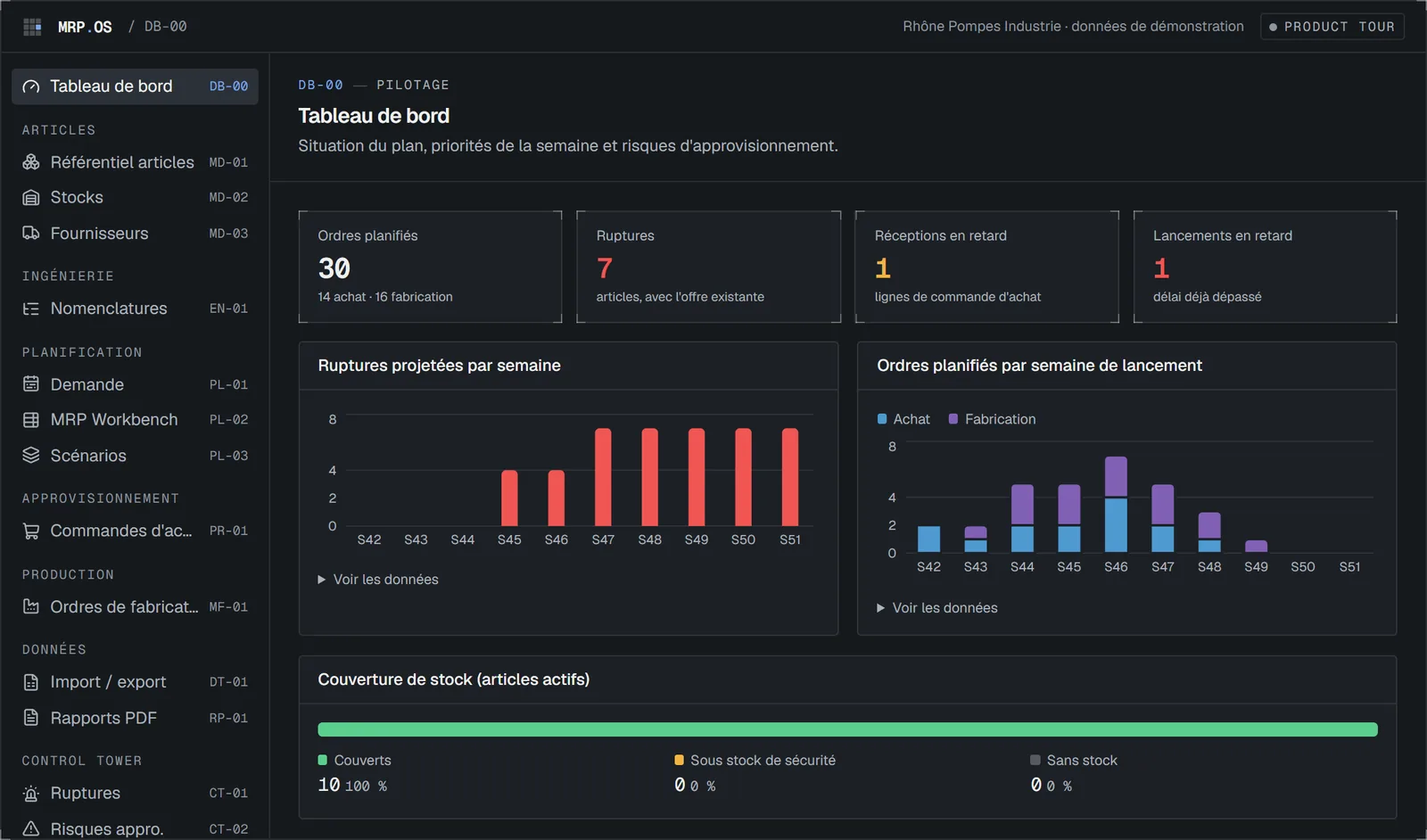
The dashboard sums up the last calculation: orders to release, shortages projected if nothing is done, delays.
Real screenshots · demonstration company, fictitious data
01 / 06 · Situation
Monday morning: where does the plan stand?
The dashboard sums up the last calculation: orders to release, shortages projected if nothing is done, delays.
- 130 planned orders: 14 purchases, 16 production
- 27 items short with existing supply
- 31 release whose lead time is already exceeded
02 / 06 · Data
What it takes to build a pump
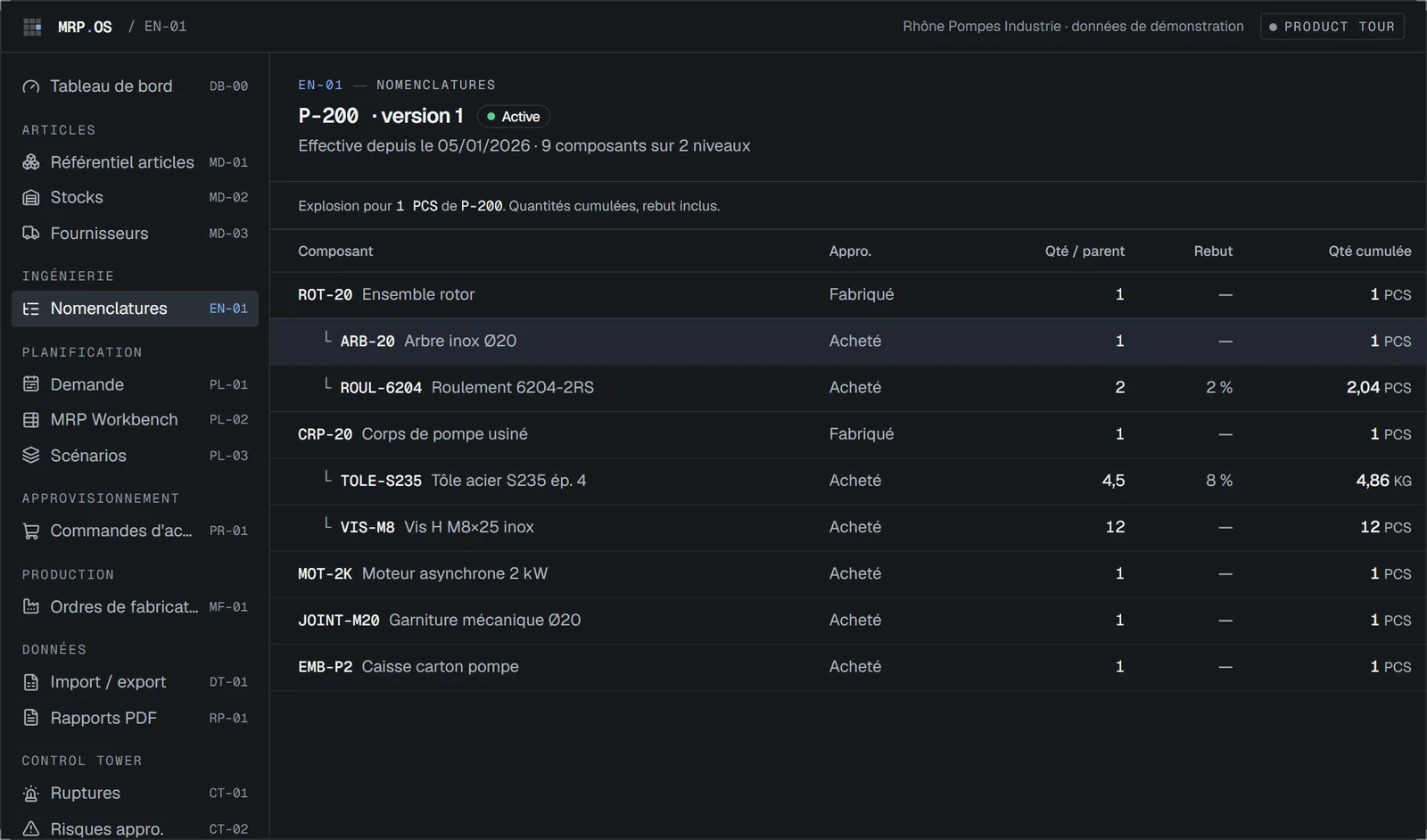
The bill of materials of the P-200 pump, versioned and dated, exploded over two levels, scrap included.
- 1Version 1, active since 05/01/2026
- 2Bearing: 2 per pump + 2 % scrap = 2.04
- 3Steel sheet: 4.5 kg + 8 % scrap = 4.86 kg
03 / 06 · Calculation
Week by week, level by level
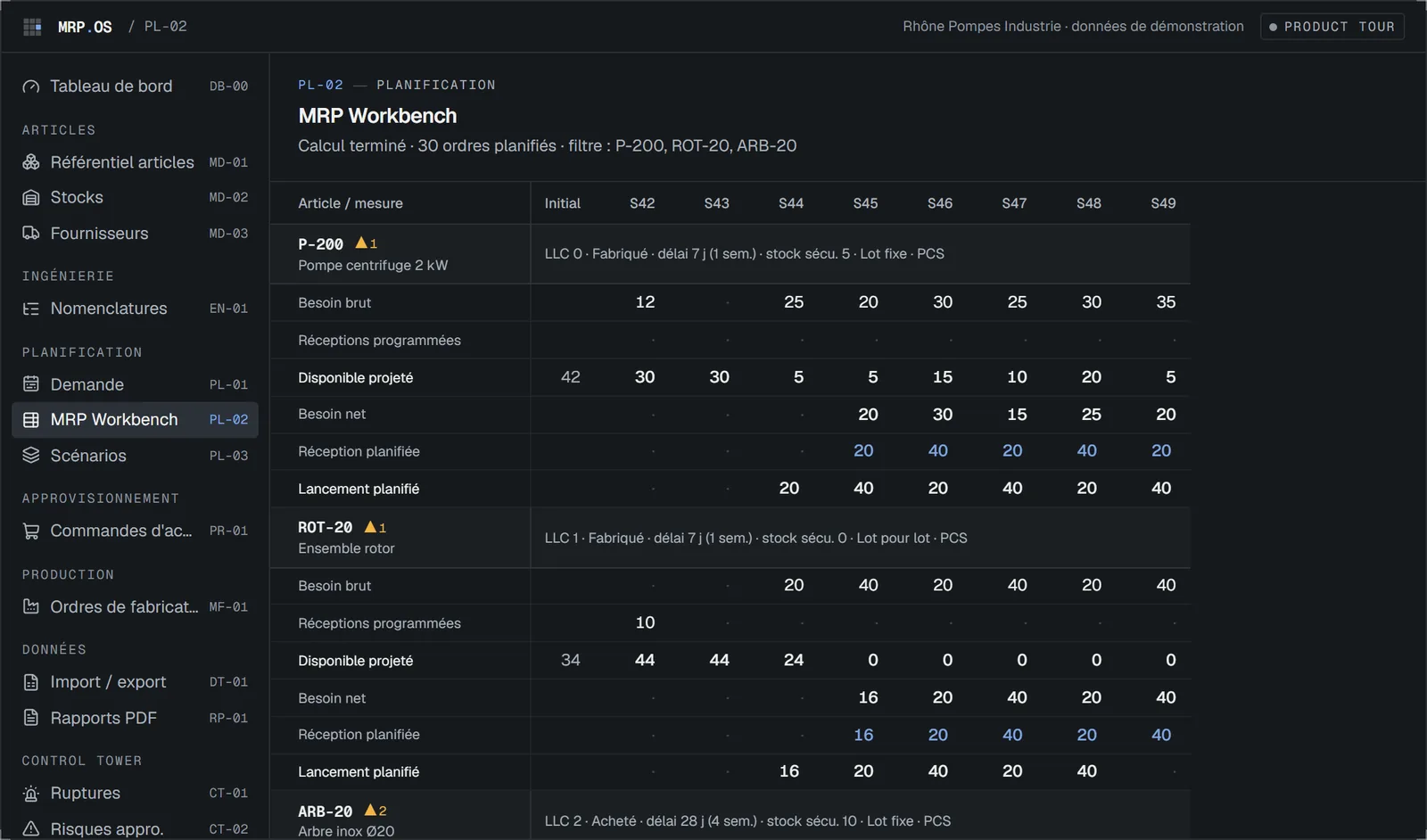
The engine nets gross requirements against stock and receipts, then goes down the bill of materials: the pump's releases become the rotor's requirements.
- 1Gross requirements of the pump, per week
- 2Projected stock: 42 at the start, then consumed
- 3Planned receipts to cover the net requirement
- 4Rotor (level 1): its requirement comes from the pump's releases
04 / 06 · Explanation
Why 50, and not 20?
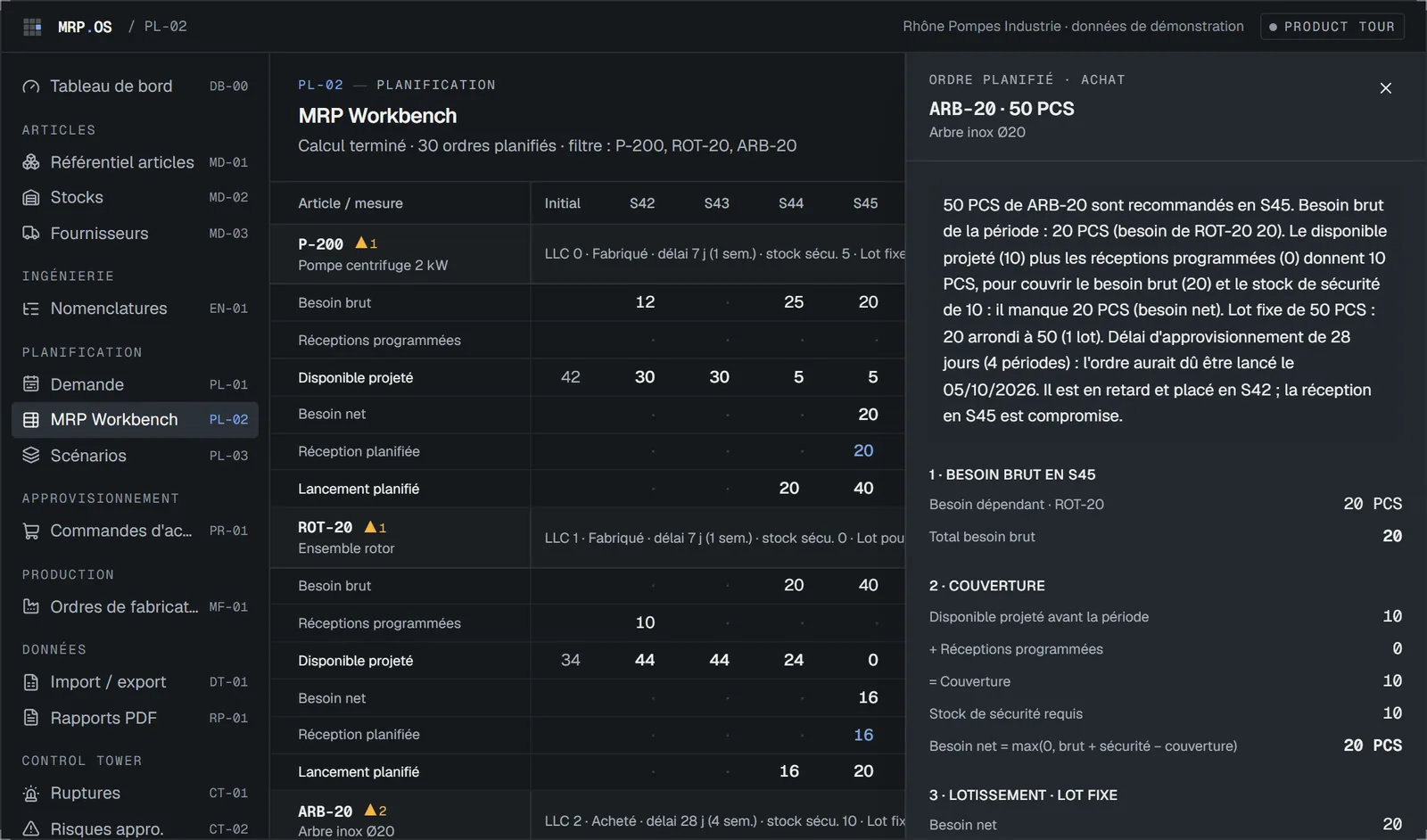
Every planned order is justified step by step. Here, the ARB-20 stainless shaft: requirement, coverage, lot, lead time.
- 1The plain-language explanation the engine writes for every order
- 2Gross requirement in W45: 20 pieces, from the rotor
- 3Net requirement = max(0, gross + safety − coverage) = 20
- 4Fixed lot of 50, 28-day lead time: the order is already late
05 / 06 · Alert
The system says where to act
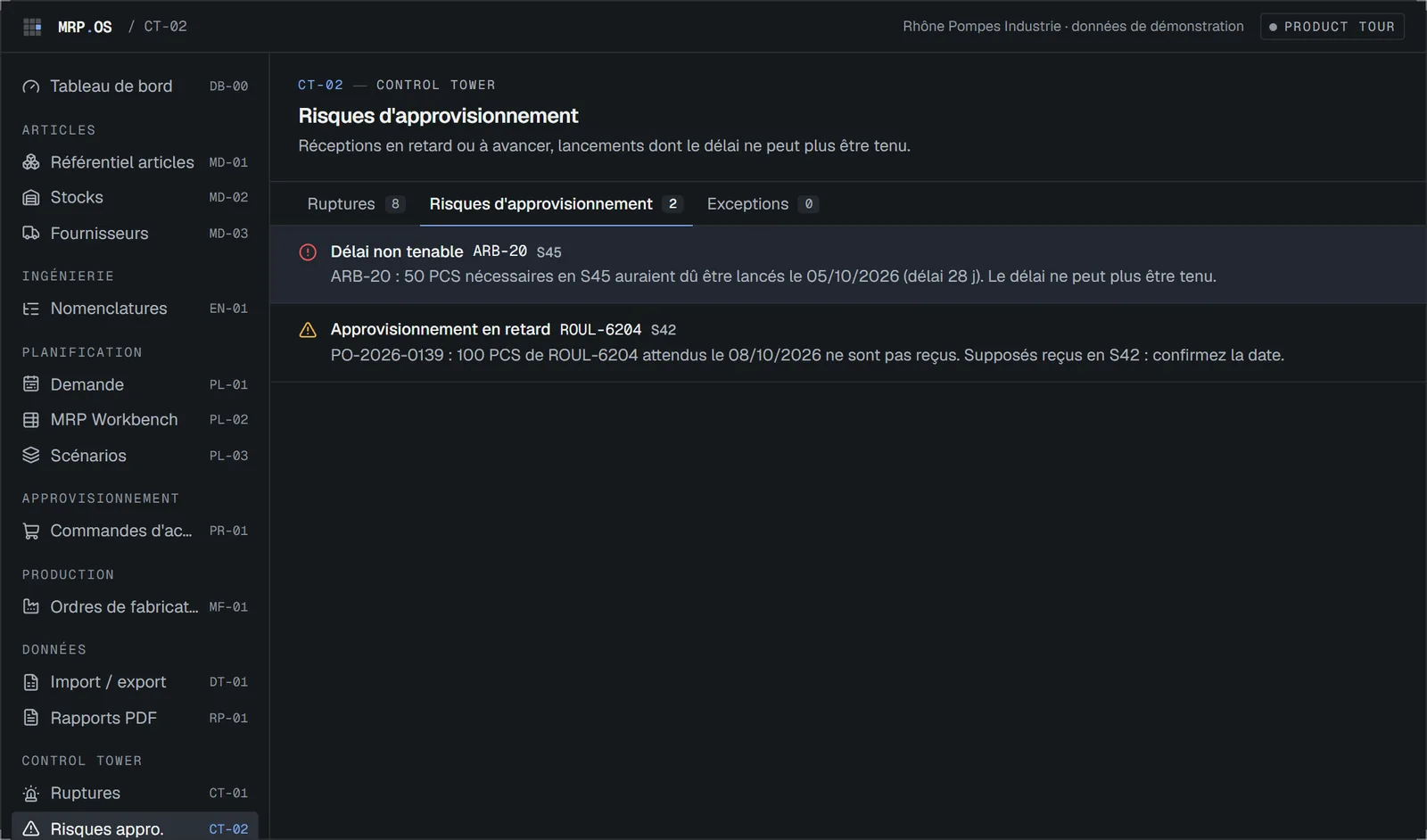
Shortages, supply risks and exceptions: every alert gives the item, the quantity and the date.
- 1Lead time not achievable: 50 ARB-20 should have been released on 05/10
- 2Late order: 100 bearings expected on 08/10
06 / 06 · Decision
What if demand rose by 20 %?
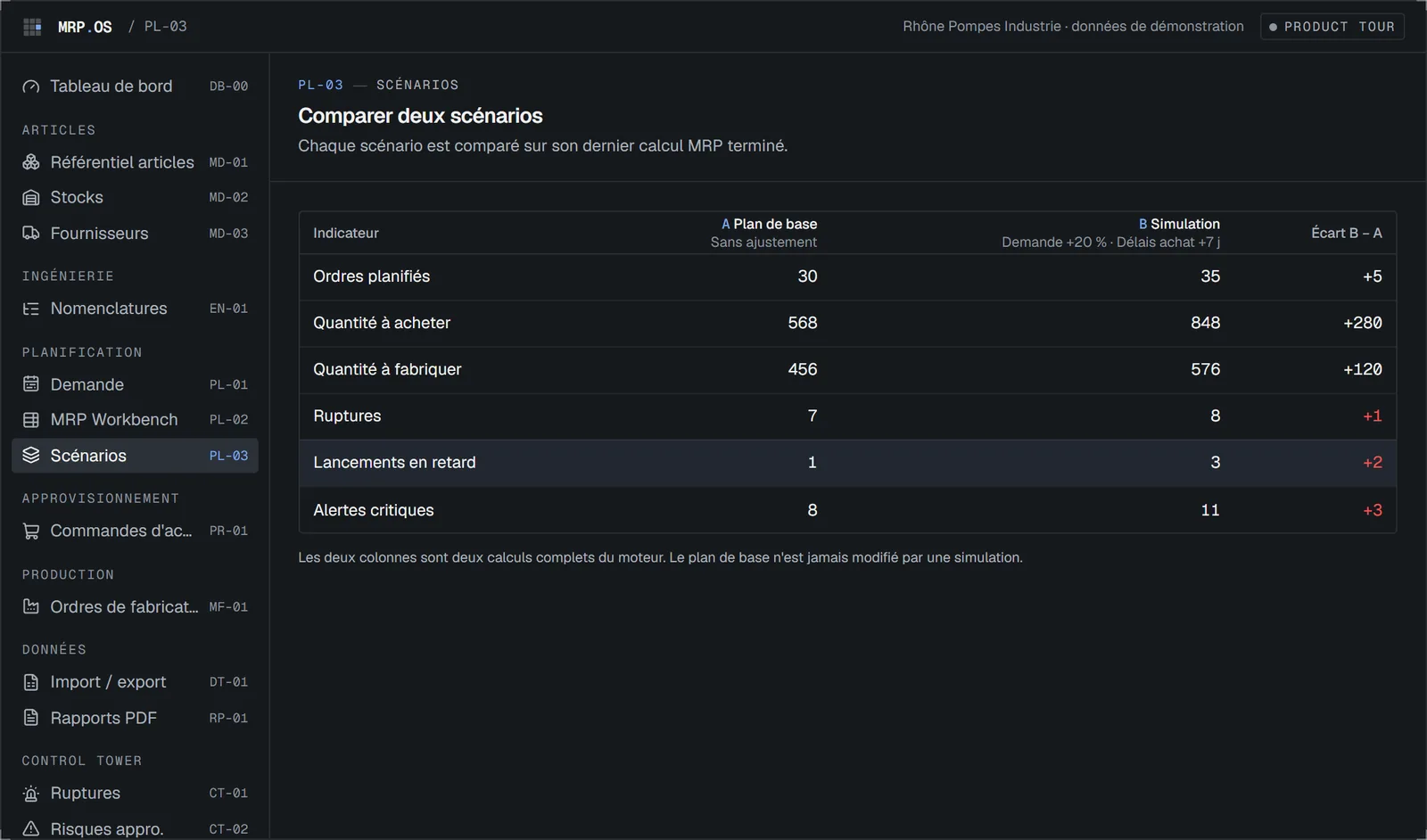
A simulation recalculates the whole plan without touching the base plan, then compares the two.
- 1Simulation: demand +20 %, purchase lead times +7 d
- 2+280 pieces to buy
- 3+2 late releases
- Real screenshots · demonstration company, fictitious data
How it works
The same thread as every project on the site: an input, a transformation, an output.
01Input
The plant's data
Items, bills of materials, stock, open orders, demand.
02Transformation
A deterministic MRP engine
Multi-level explosion, net requirements, lot sizing, lead-time offsetting.
03Output
A plan you can explain
Dated purchase and production orders, alerts, and the reason for every quantity.
What the software does
- 01Master data: items, versioned bills of materials, stock and movements, suppliers, demand per period.
- 02Deterministic MRP engine: multi-level explosion, net requirements, lot sizing (lot-for-lot, fixed lot, minimum order, multiple) and lead-time offsetting.
- 03Every planned order is explained step by step: gross requirement, coverage, safety stock, lot sizing, lead time.
- 04Control: dashboard, shortage and delay alerts, “what if?” simulations compared with the base plan.
Where the project stands
A working application, tested on a demonstration company: same data, same result, and every quantity explained. A personal project still in development, not yet online.